
Audit Overview
Your store's untapped revenue potential — and how to unlock it
Why We Created This Audit
We analyzed https://www.amandean.com/ the same way we've audited 350+ e-commerce stores — looking for the specific gaps between your current experience and what top-performing Health & Wellness stores deliver. Every finding in this report is a revenue opportunity backed by industry data and competitive benchmarks.
What We Analyzed
- UX & Conversion Design13 findings
- Technology & App StackPlatform + 6 apps
- Industry BenchmarksHealth & Wellness
Pages Analyzed
- Homepage3 findings
- Collection Pages3 findings
- Product Pages (PDP)5 findings
- Cart & Checkout2 findings
 This audit was prepared by Growisto — a CRO-led Website development team behind 167% conversion growth for Atomberg, 46% CR lift for TyresNmore, and 350+ e-commerce projects.
UX & Conversion Findings
Page-by-page analysis with visual comparisons against top Health & Wellness stores
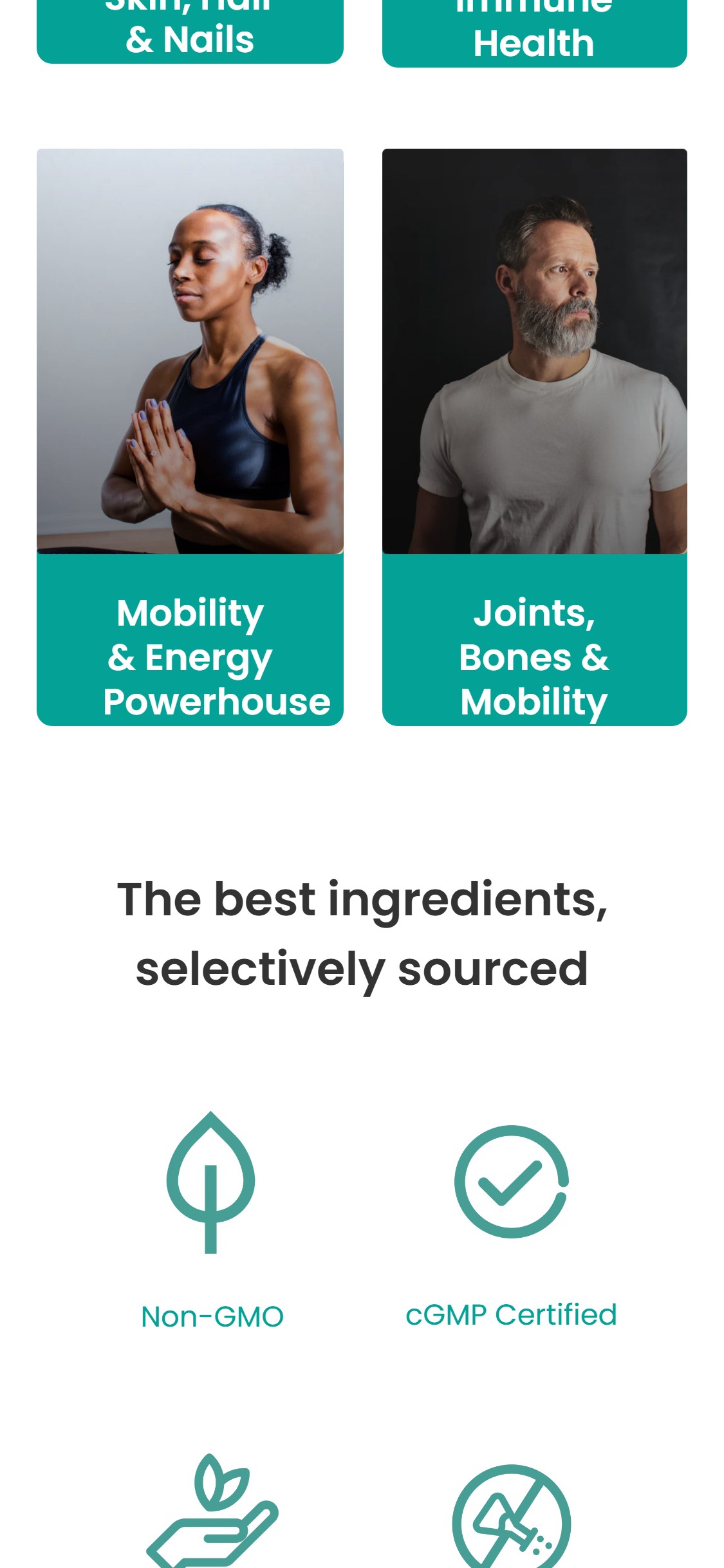
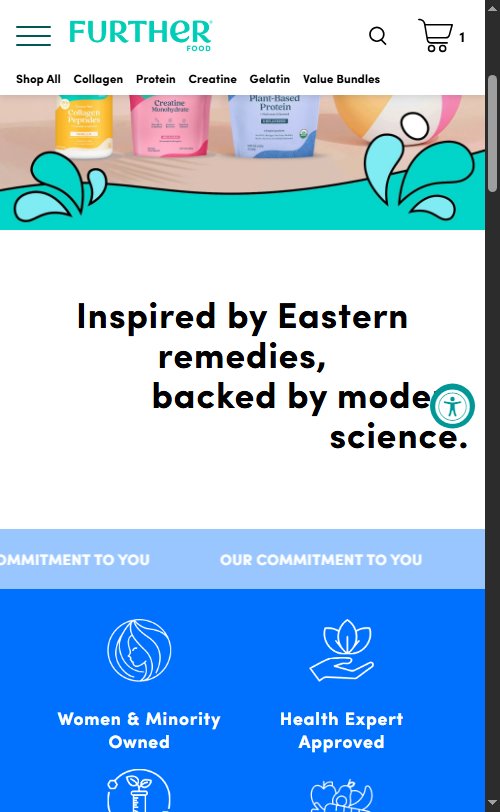
- The Amandean homepage trust badges exist but are not displayed in a scrolling horizontal strip near the top of the page — they are buried below the primary hero and product sections.
- First-time supplement buyers evaluating Amandean against competitors expect to see certification proof (Non-GMO, Third-Party Tested, GMP) within the first viewport — the current layout fails this expectation.
- US health & wellness benchmark data confirms: 9/10 top stores have a trust badge bar within the first two scrolls of the homepage; 4/5 US stores include Non-GMO, Vegan, Third-Party Tested, and Traceable badges prominently.
- Amandean has legitimate certifications and third-party testing credentials that are not being surfaced effectively at the discovery stage — a significant missed opportunity to reduce first-visit bounce.
- Add a horizontal trust badge strip between the hero section and the first product section, showing at minimum: Third-Party Tested, Non-GMO, GMP Certified, Free Shipping threshold, and Money-Back Guarantee.
- Use iconographic badge designs (visual seal + 2–3 word label) rather than text-only claims — visual badges carry substantially more credibility weight with first-time buyers.
- Ensure the badge bar is visible on both desktop and mobile without scrolling — a sticky announcement bar upgrade or a dedicated section immediately below the hero will satisfy this requirement.
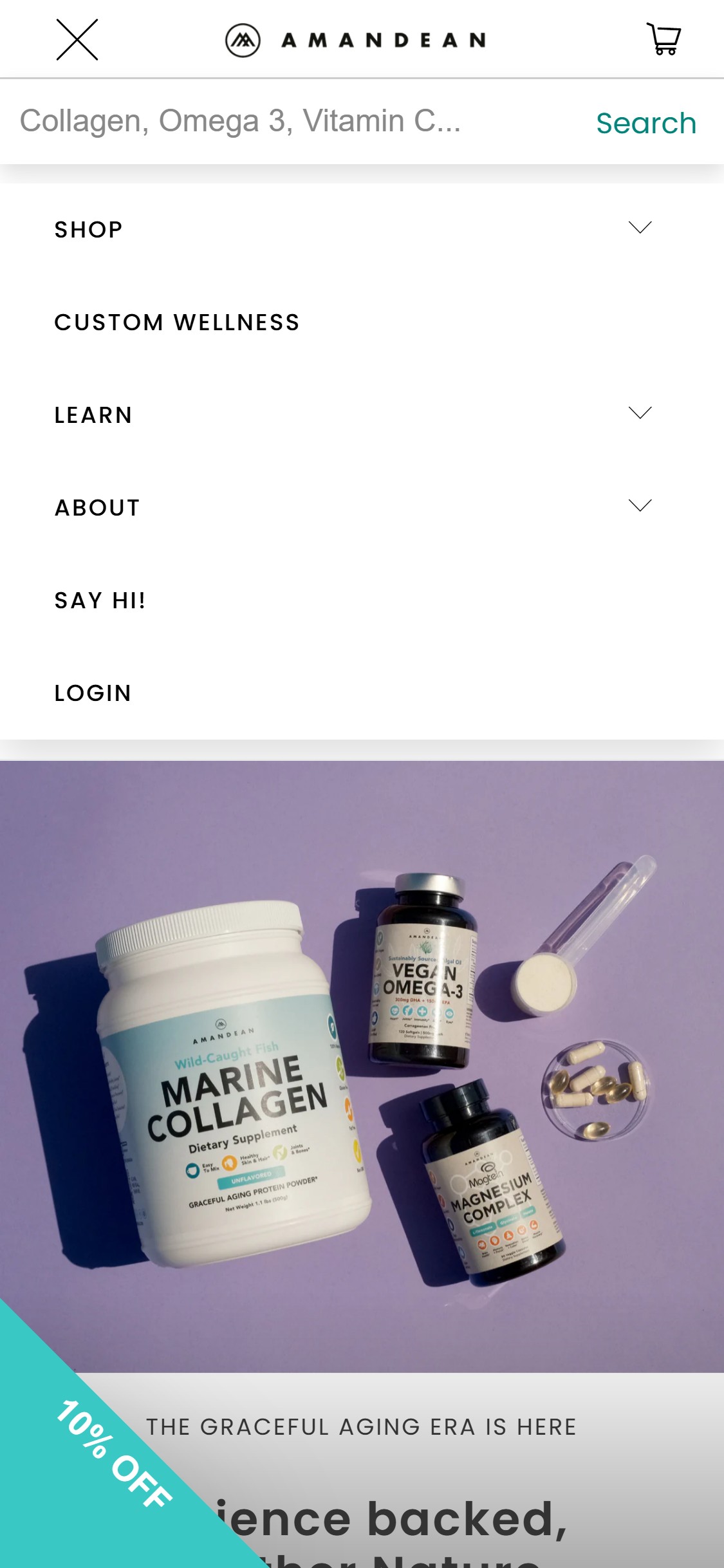
- The Amandean navigation shows top-level items organized around product categories (Collagen, Vitamins) rather than customer health goals — a user seeking joint support or better skin must already know that collagen is the relevant product category.
- First-time supplement buyers typically self-identify by health concern (I want better skin, I have joint pain) rather than by ingredient category — concern-based navigation meets them where they are.
- Growing pattern benchmark: 7/10 top health stores now use concern-based navigation labels (e.g., Onnit: Cognition, Sleep, Gut Health, Fitness) as primary nav items alongside or instead of product type labels.
- Without a concern-based entry point, Amandean loses a critical discovery path for new customers who are supplement-curious but not yet supplement-literate.
- Add a 'Shop by Goal' dropdown or mega-menu section with concern-based categories: Skin & Hair, Joint & Mobility, Gut Health, Immunity, Energy & Focus — each linking to a filtered collection view.
- Alternatively, add a 'What’s Your Goal?' navigation label that opens a short quiz or concern-selection landing page, building a personalized recommendation path.
- Retain the existing product-category navigation alongside the new concern-based labels — concern-first benefits new visitors while category-first serves repeat buyers who already know what they want.

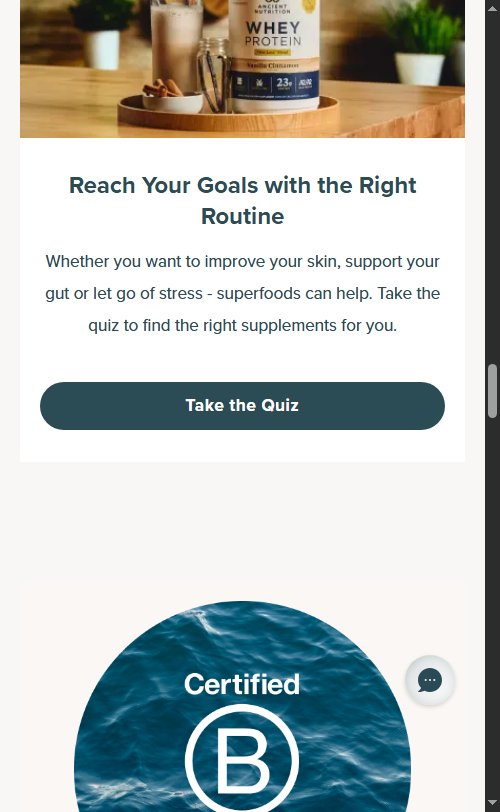
- The Amandean homepage hero section contains a brand message and product CTA but no quiz, health goal selector, or personalization entry point.
- Supplement-curious first-time visitors who are not yet sure which product is right for them have no guided discovery path — they must either browse the full catalog or leave.
- Differentiator benchmark: 4/10 stores now feature a quiz CTA prominently (Traya’s quiz is the primary homepage CTA; Onnit and Seed use goal selectors) — brands with quizzes report lower bounce rates and higher email capture rates from organic traffic.
- Amandean’s product catalog spans collagen types (I, II, III, V, X), specific formulations, and vitamin supplements — the complexity is high enough that a quiz would meaningfully improve conversion for first-time visitors.
- Add a 'Find Your Perfect Supplement' quiz CTA as a secondary hero action or as a dedicated homepage section below the hero — 4–5 questions covering health goals, lifestyle, and dietary preferences should be sufficient.
- Use a quiz tool like Octane AI or Typeform embedded in Shopify to deliver personalized product recommendations at the end of the quiz, with an optional email capture step.
- Position the quiz CTA alongside (not instead of) the primary product CTA — returning visitors and decided buyers should still have a direct path to the catalog.
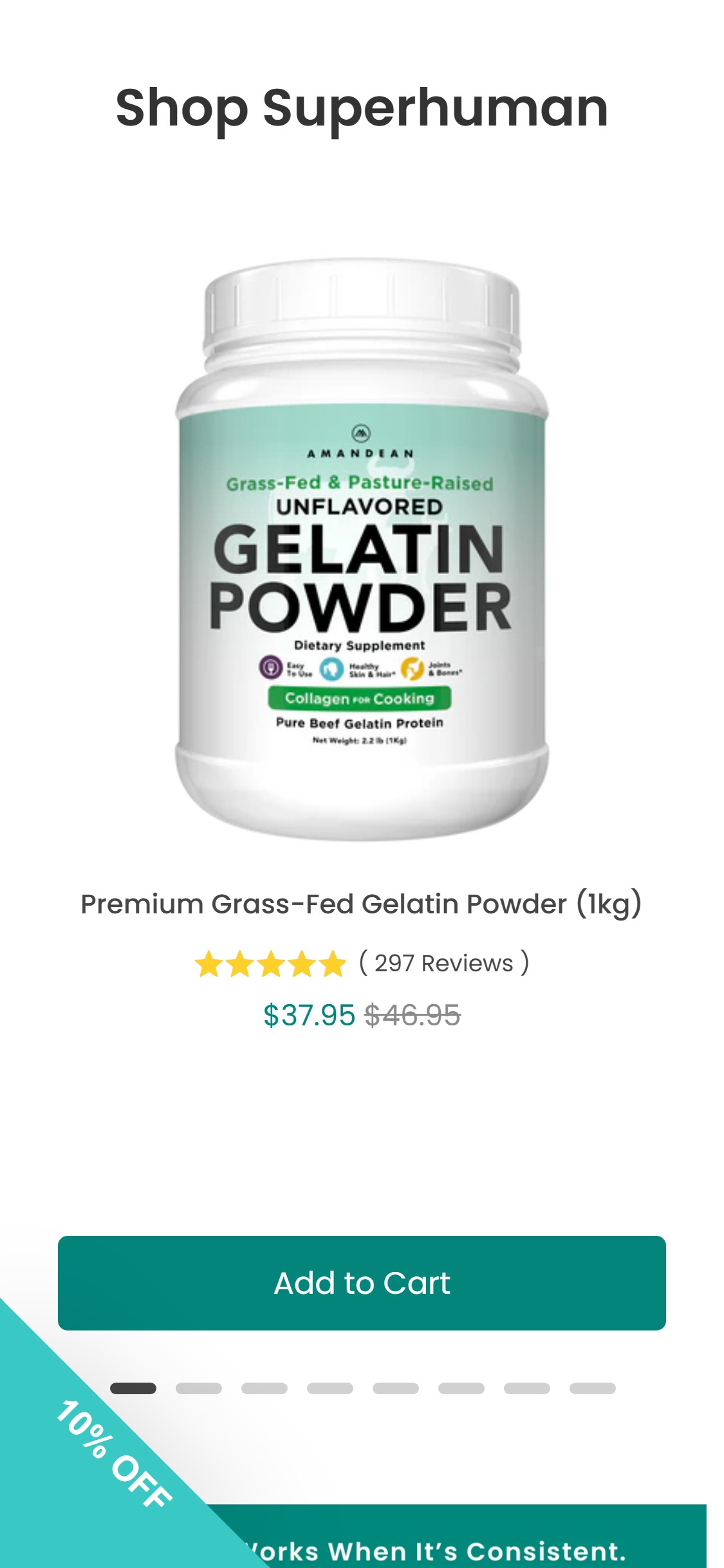
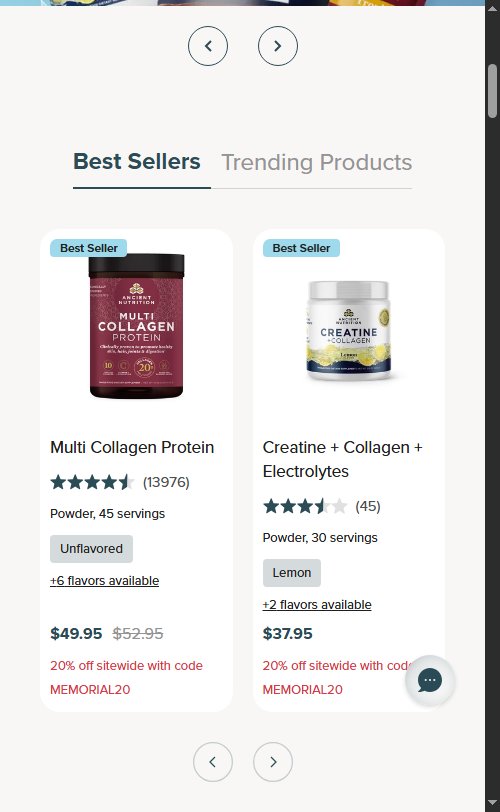
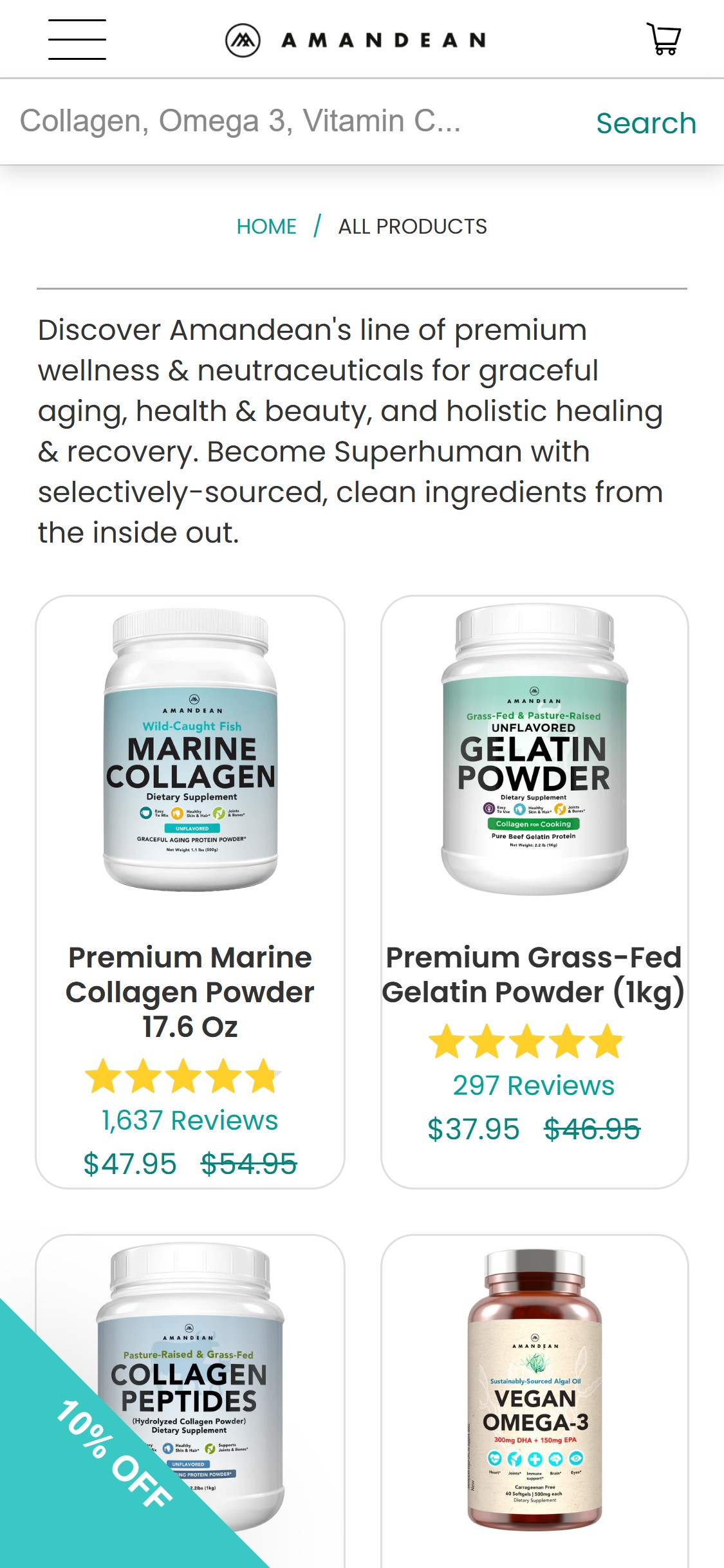
- Amandean product cards on the homepage and collection page display the product name and price but do not show star ratings or review counts — confirmed across multiple product card instances.
- Product reviews exist on Amandean PDPs — the aggregate rating data is available but is not being surfaced at the collection card level where purchase comparisons are made.
- Growing pattern benchmark: 7/10 top stores (Seed, Moon Juice, Onnit) show star ratings on collection cards — the pattern has become a buyer expectation for online supplement shopping.
- Without visible ratings on cards, all purchasing decisions are deferred to individual PDP visits — users who would have added to cart based on strong ratings during browsing are instead making extra navigation clicks.
- Enable star rating display on collection product cards — show aggregate star rating (e.g., ★ 4.8) and review count (e.g., (243)) below the product title on each card.
- If the current review app (Okendo or similar) does not natively inject ratings onto collection cards, use a metafield-based approach or a collection card app to surface the data.
- Prioritize showing ratings on cards for products with 50+ reviews where the social proof signal is strongest — hide the rating display on new products with fewer than 10 reviews to avoid undermining confidence.
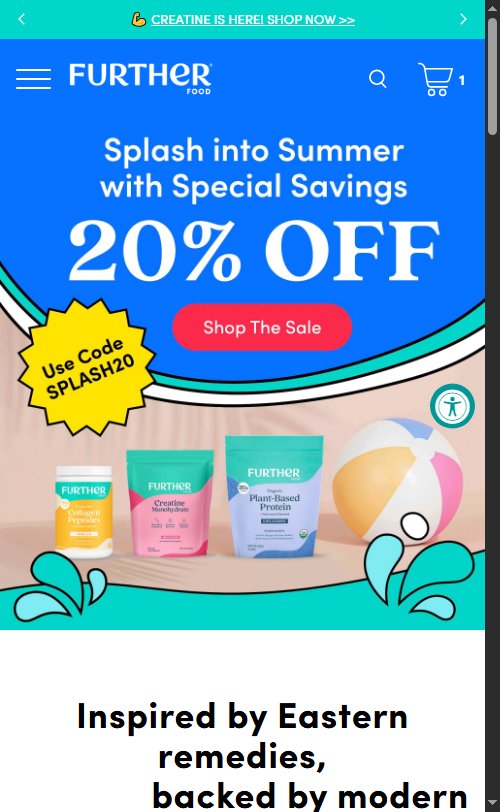
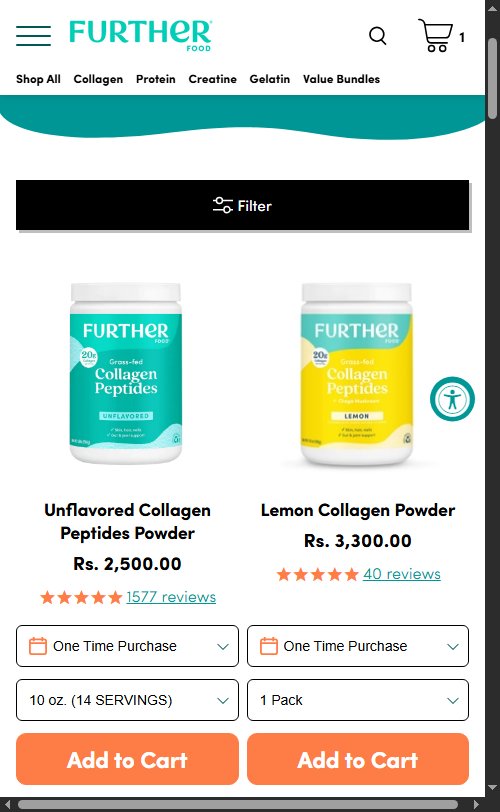
- Amandean collection product cards display the regular (one-time purchase) price only — no subscribe-and-save price, no 'From $X/mo' label, and no subscription savings callout is visible on any card.
- Amandean does offer a Subscribe & Save option on PDPs — the lower subscription price exists but is only discoverable after clicking through to an individual product page.
- US-specific must-have benchmark: all 5 US health brands in the reference set show subscription pricing on collection cards, confirming this is a category expectation not an optional enhancement.
- Showing the subscribe price on cards (e.g., 'Subscribe: $32 / One-time: $38') at the browsing stage primes visitors for subscription consideration before they even reach the PDP, increasing subscription conversion rates.
- Add a subscription price line to collection cards below the one-time price: display 'Subscribe & Save: $X/mo' in a highlighted color (e.g., green) to visually distinguish the savings.
- Show a percentage savings callout on the card: a small badge reading 'Save 15% with subscription' adjacent to the subscription price creates urgency without cluttering the card.
- Coordinate the collection card subscription display with the PDP subscription selector — when a user arrives at the PDP via a card showing subscription pricing, the subscription option should be pre-selected by default.
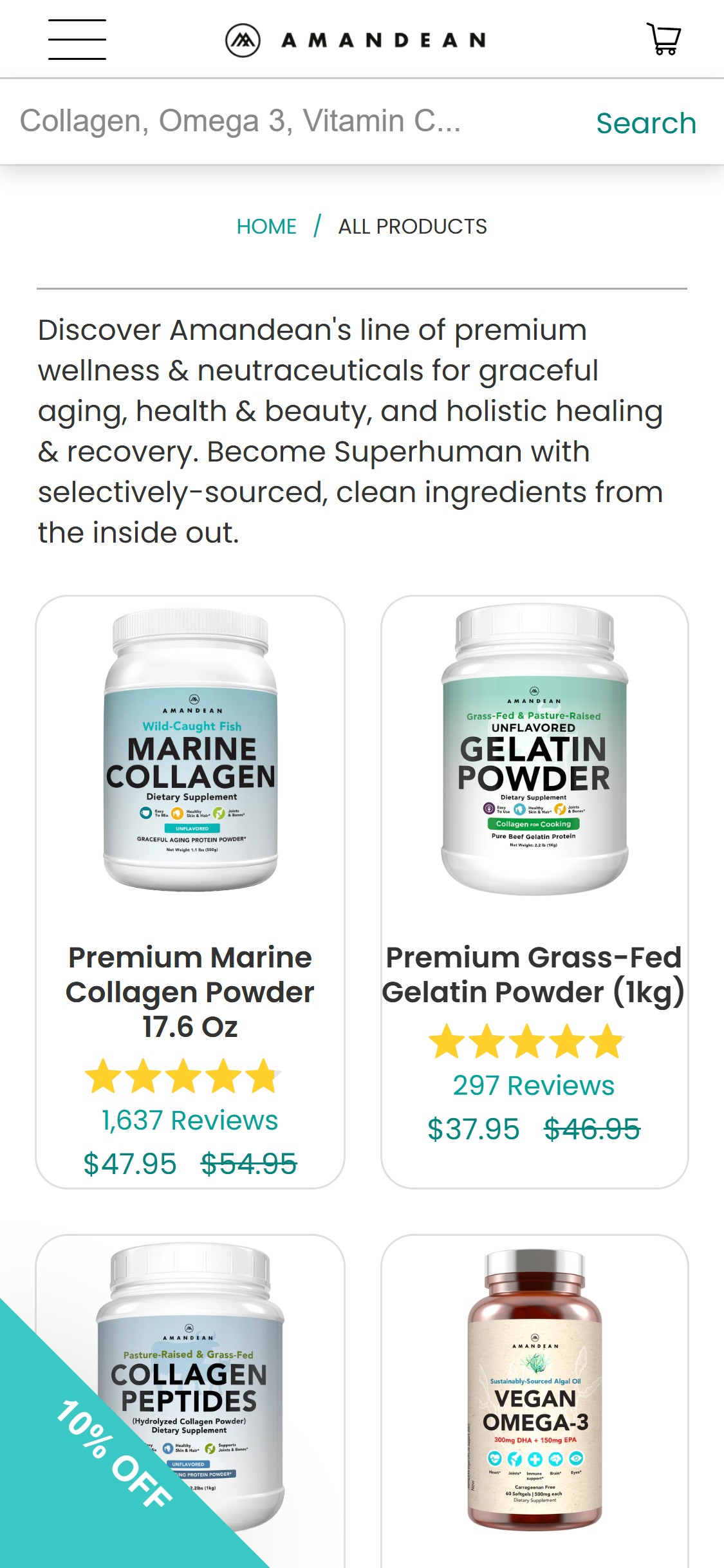
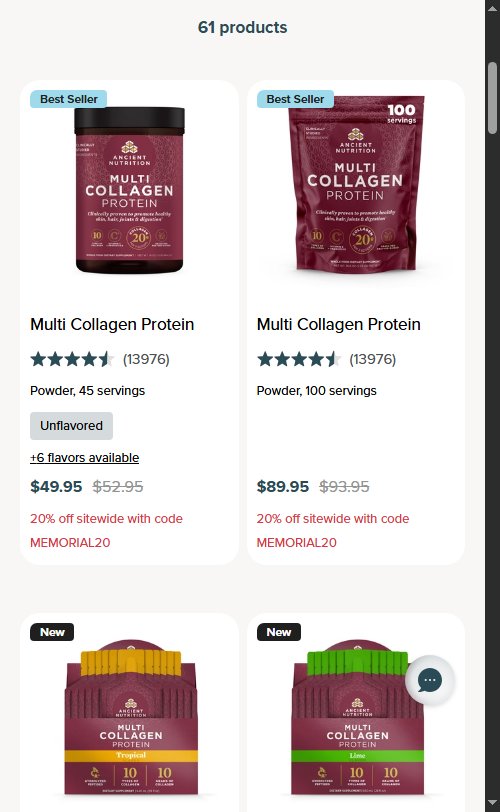
- The Amandean collection page shows product cards in a grid with no filter sidebar, no filter dropdown, and no faceted search controls — confirmed in the col_f1_no_filter.jpeg screenshot.
- With multiple collagen types (Type I, II, III, V, X), formats (powder, capsule, liquid), and health goals (joint, skin, gut), the catalog has meaningful filter axes that are currently unexploited.
- Without filters, users who want ‘capsule format only’ or ‘collagen for joint health’ must manually inspect each product tile to determine relevance — a significant browsing friction point.
- Shopify’s native OS 2.0 faceted filtering is available and can be enabled in theme settings without additional apps — this is a zero-cost implementation path.
- Enable Shopify’s native collection filtering with at minimum two filter axes: Product Type (Collagen, Vitamins, Bundles) and Format (Powder, Capsules, Liquid).
- Add a ‘Shop by Goal’ filter category: Joint & Mobility, Skin & Hair, Gut Health, Immunity — each filtering to the relevant product subset.
- Display active filter chips above the product grid so users can see and clear their current filter selections without navigating away from the results.
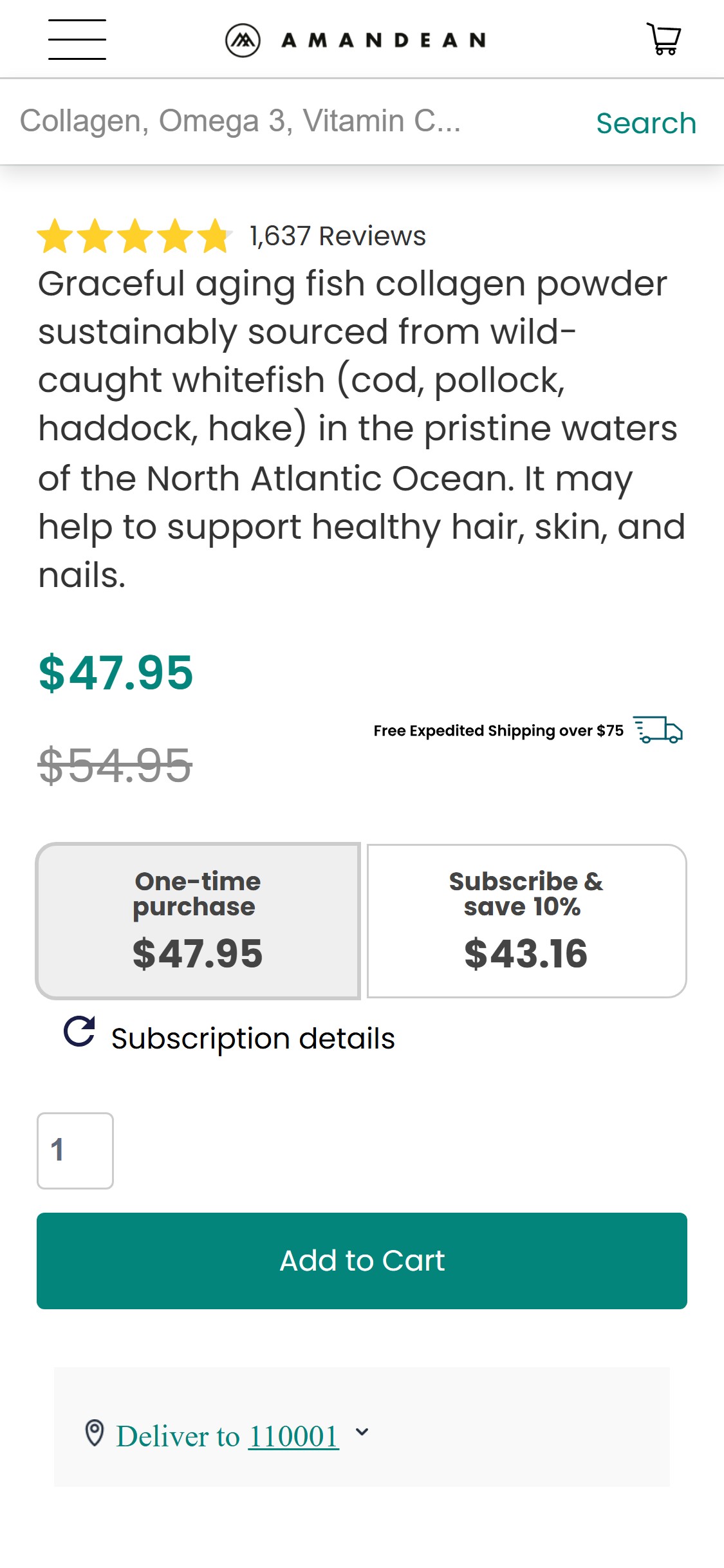
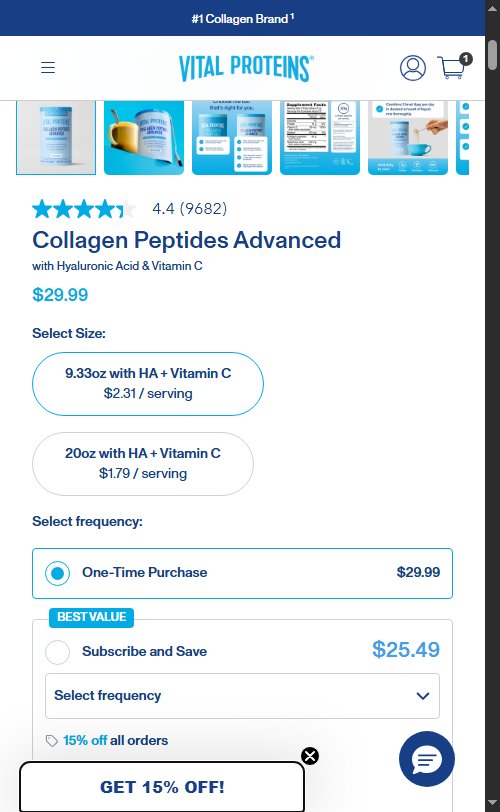
- The Amandean PDP ATC zone contains the product title, variant selector, price, and Add to Cart button — no visual certification badge images (Non-GMO Project Verified, Third-Party Tested, GMP Certified, or similar) appear near the ATC.
- Quality claims exist in the product description text but text-only claims carry significantly lower trust weight than iconographic certification badges with recognizable third-party logos.
- US health & wellness benchmark standard: 8/10 top stores show visual certification badges within the ATC zone — this is the single highest-impact trust placement on a supplement PDP.
- Amandean's product line (marine collagen, grass-fed collagen) has inherent quality differentiators (sourcing, testing) that are not being visually communicated at the moment of purchase commitment.
- Add a horizontal row of 3–5 certification badge icons between the ATC button and the product description accordion: Third-Party Tested, Non-GMO, Grass-Fed/Wild-Caught sourcing badge, Money-Back Guarantee, and Free Shipping threshold.
- Use officially recognized badge imagery where applicable (Non-GMO Project Verified logo, NSF Certified for Sport, etc.) rather than custom-designed badges — recognizable third-party logos carry more credibility than branded custom seals.
- If third-party certifications are not yet held, prioritize internal quality badges (Third-Party Lab Tested, No Artificial Additives, Traceable Sourcing) with iconographic treatment as an interim solution.
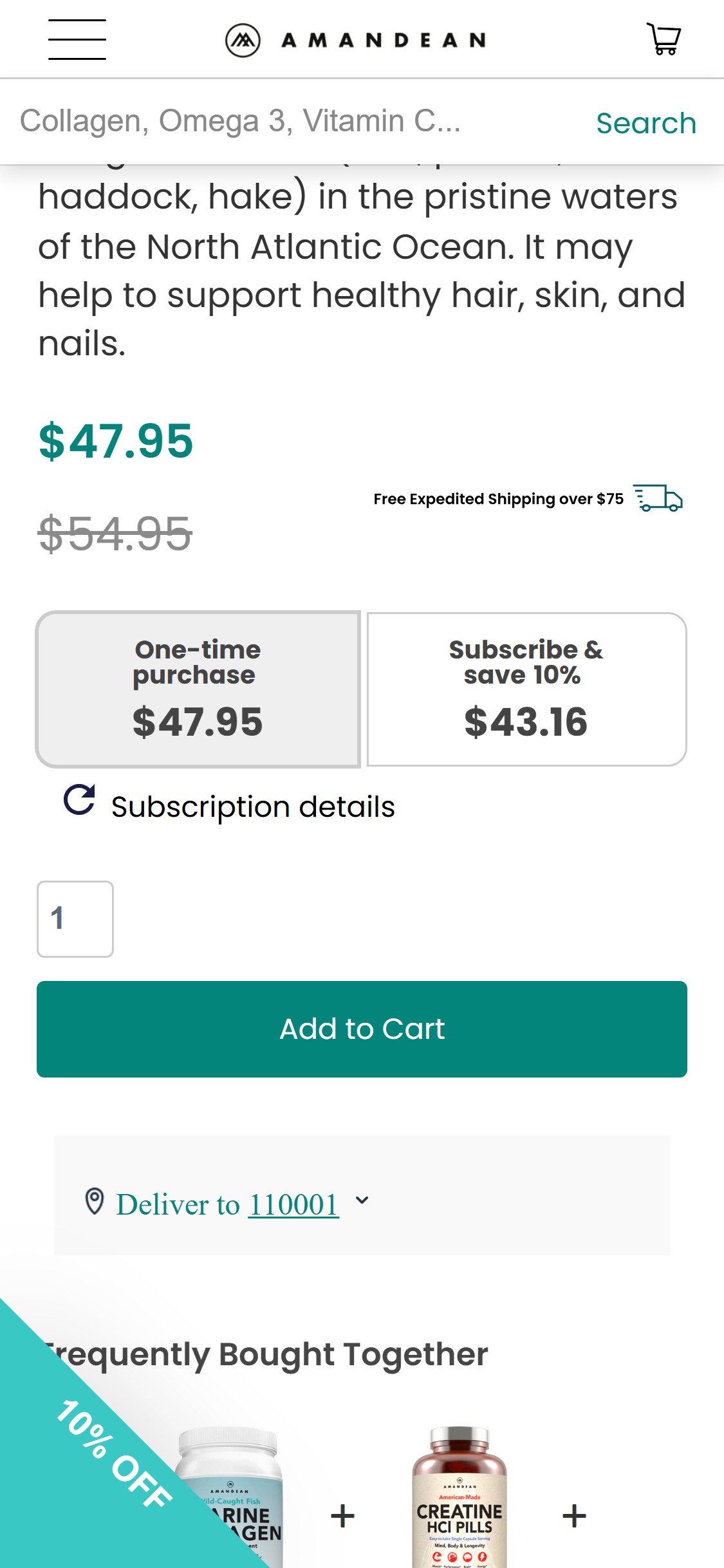
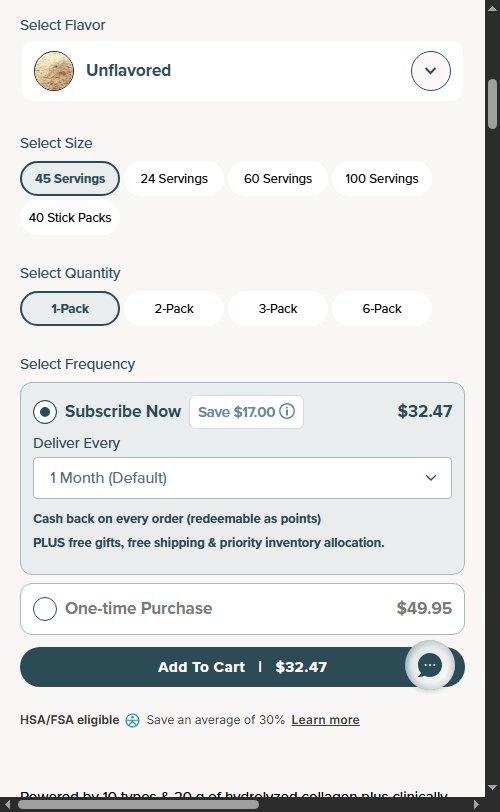
- The Amandean PDP shows both a Subscribe & Save option and a one-time purchase option — however, the one-time purchase option is selected by default when a user arrives on the page.
- US supplement industry standard: all 5 US health brands in the benchmark pre-select the subscription option by default — this is not an aggressive dark pattern but a recognized best practice for brands whose subscription economics depend on volume.
- Pre-selecting subscription is especially impactful for Amandean given that repeat collagen consumption is intrinsic to the product’s value proposition (collagen benefits require consistent daily use over weeks/months).
- When one-time purchase is the default, users who are subscription-willing but not subscription-proactive will complete a one-time order — requiring a subsequent re-engagement campaign to convert them to subscribers.
- Change the default selected state on the PDP purchase type selector to ‘Subscribe & Save’ — this is a single-line code change in the subscription app configuration (Recharge or native Shopify).
- Display the subscription savings prominently next to the pre-selected option: ‘Subscribe & Save 15% — $X/month (cancel anytime)’ with the savings amount highlighted in a contrasting color.
- Add a ‘Why Subscribe?’ tooltip or expandable info section near the selector explaining: consistent results, cancel anytime, and automatic delivery benefits — addressing the primary objection to subscription commitment.
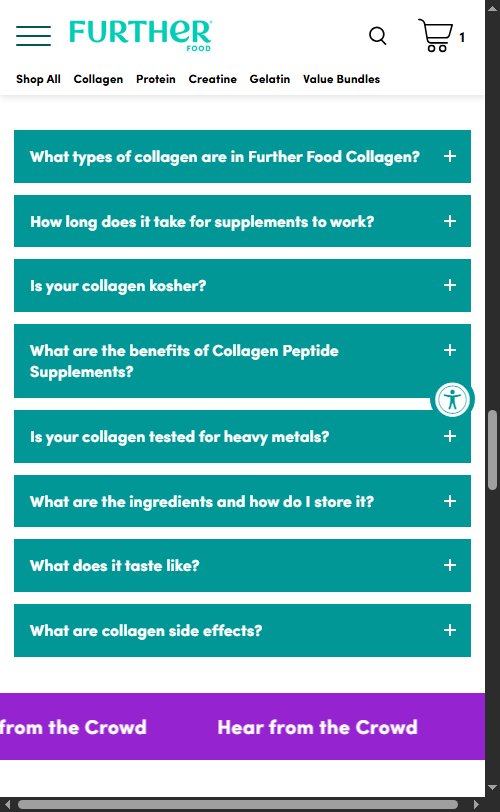
- Amandean product descriptions contain benefit claims (improved joint health, skin elasticity, gut health) but do not reference specific clinical studies, trial numbers, or link to research summaries.
- Growing benchmark: 6/10 top stores now include at least one clinical study citation or a 'View Research' link on their PDPs — Seed’s 'View Clinical Trials' link is the gold standard for this pattern.
- The US supplement market is increasingly populated by buyers who research ingredients before purchasing — buyers who find no research references on-site will search externally, increasing the risk of abandonment to a competitor who surfaces the science.
- Collagen and marine collagen specifically have a meaningful body of peer-reviewed research — Amandean is leaving substantial credibility on the table by not citing any of it.
- Add a 'The Science' section or accordion on PDPs that cites 2–3 specific clinical studies relevant to the product’s key claims, with PubMed links or summary text.
- Use a formatted callout block: study name, year, key finding in one sentence, and a 'Read Study' link — this gives informed buyers the evidence they need without overwhelming general visitors.
- Coordinate clinical claims with the product copy: if the description claims '15% improvement in skin hydration after 4 weeks,' link that specific claim to the supporting study citation.
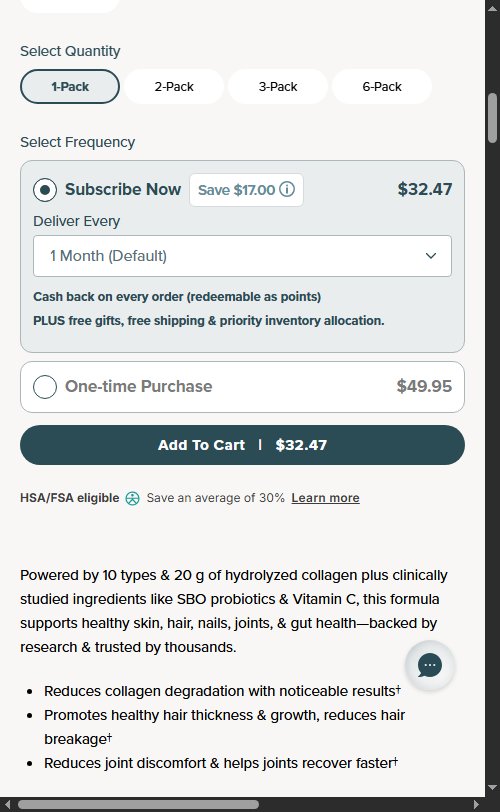
- The Amandean PDP ATC zone contains no HSA/FSA eligibility badge or messaging — confirmed during the PDP audit session.
- US benchmark growing pattern: 2/5 top US health brands now display HSA/FSA eligibility near the ATC (Ritual prominently shows 'HSA/FSA eligible — Save an average of 30%').
- Collagen and vitamin supplements may qualify for HSA/FSA spending depending on documented medical use — brands that surface this eligibility messaging reduce the effective price friction for eligible buyers.
- The HSA/FSA market represents over $34B in annual pre-tax health spending in the US — buyers with HSA accounts actively seek out eligible products and may switch brands specifically for this benefit.
- Investigate HSA/FSA eligibility for Amandean’s core product line via a qualified HSA/FSA platform (e.g., Truemed, FSA Store eligibility checker) — if eligible, integrate a payment/badge solution.
- If eligibility is confirmed, add an HSA/FSA badge icon near the ATC with copy: 'HSA/FSA Eligible — use pre-tax dollars' and a tooltip explaining the average savings.
- Consider integrating Truemed or a similar HSA/FSA checkout solution that allows buyers to pay directly from their HSA account at checkout — this removes the reimbursement friction for eligible buyers.
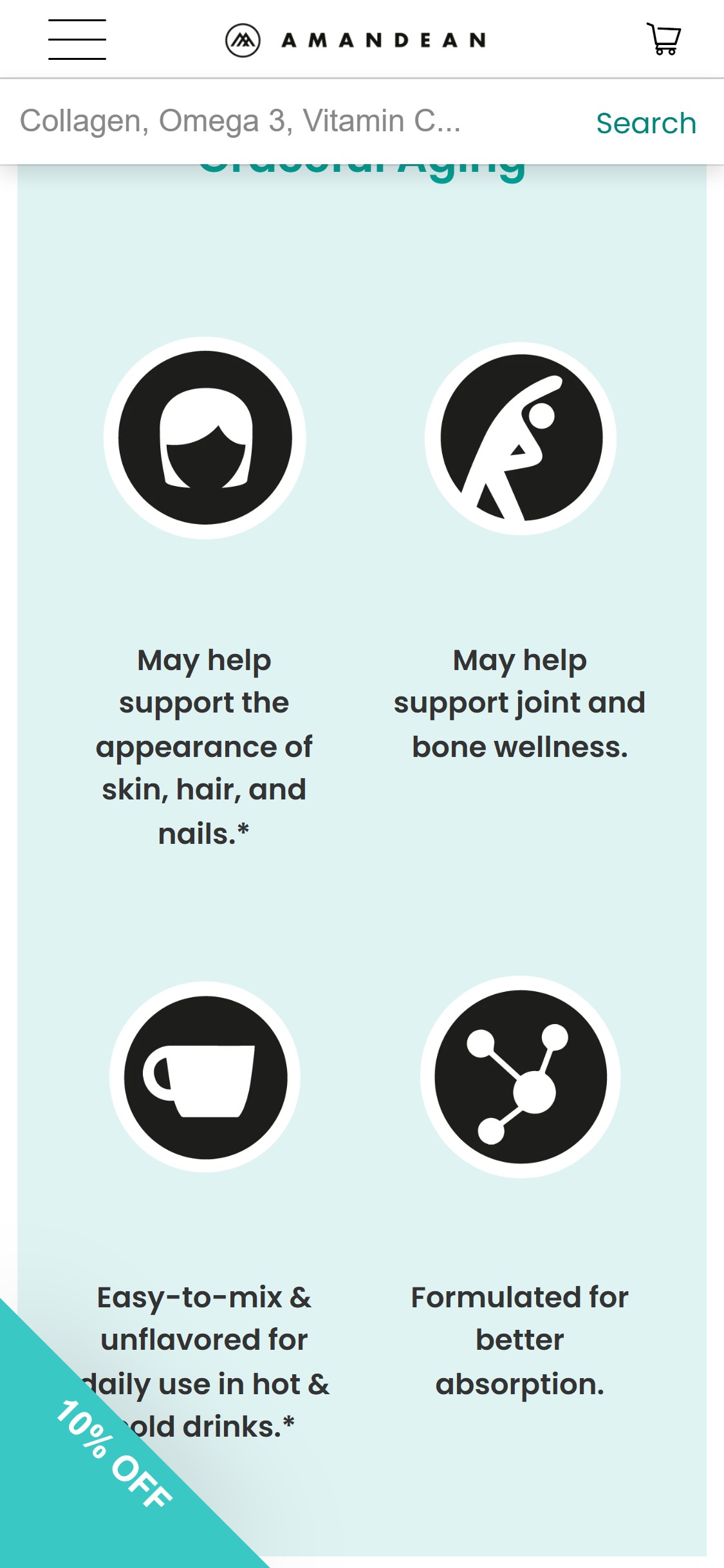
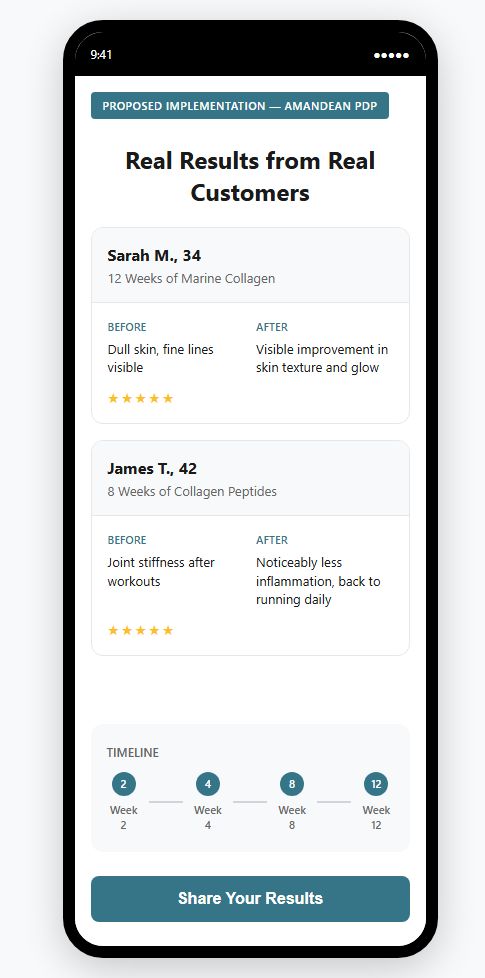
- The Amandean PDP mid-section shows product information and reviews but no before/after customer transformation section with timeline progression.
- The primary purchase objection for supplements is efficacy uncertainty: 'Will this actually work for me?' — before/after evidence with a realistic timeline (e.g., 'Results at 4 weeks / 8 weeks / 12 weeks') directly addresses this objection.
- Differentiator benchmark: 3/10 top stores use before/after sections — Traya’s video before/after with 3-month and 6-month progression markers is cited as the gold standard for this pattern.
- Collagen products are particularly well-suited for this pattern given the visible, photographable outcomes (skin texture improvement, hair quality) that customers can document and share.
- Add a 'Real Results' section below the product description accordion featuring 3–4 customer case studies with: before photo, after photo (4–12 weeks), name, age, and product used.
- Include a timeline label for each result: 'Week 2: First visible changes' / 'Week 6: Significant improvement' — setting realistic expectations while demonstrating efficacy.
- Collect visual testimonials through a post-purchase Klaviyo flow (6-week trigger) specifically requesting before/after photos with an incentive (store credit, featured customer spot).
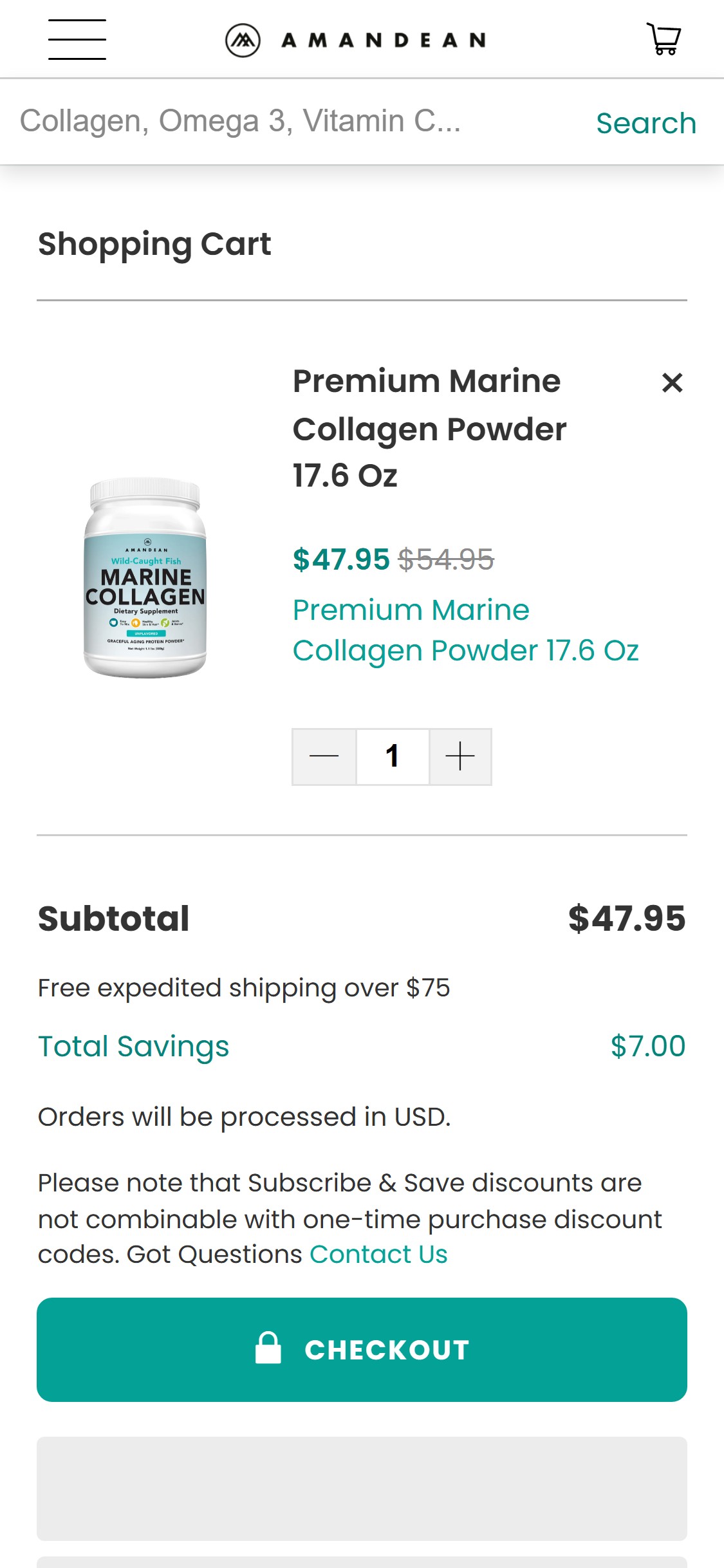
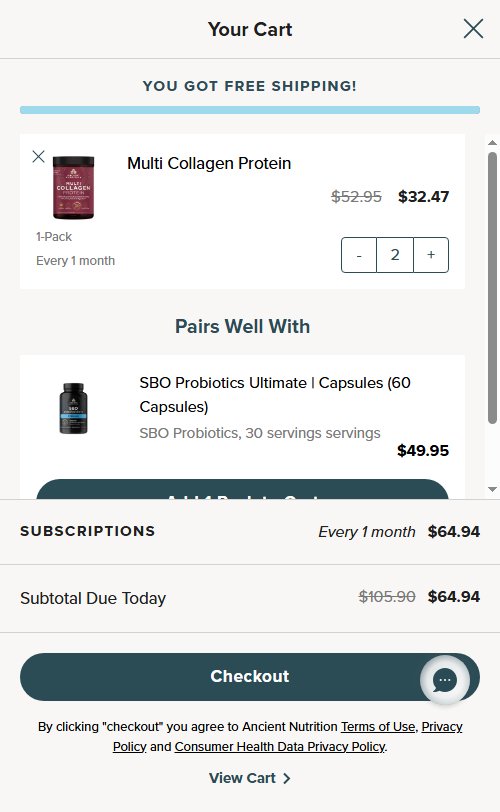
- The Amandean cart page checkout area shows the cart subtotal and checkout button but does not display a free shipping progress bar or threshold messaging.
- Amandean does offer free shipping on orders over a qualifying amount — this threshold exists but is not surfaced dynamically in the cart based on the current cart value.
- Growing benchmark: 6/10 health stores show a free shipping progress bar in the cart (e.g., Onnit: ‘Free Shipping on Orders $100+’ — showing how close the current cart is to the threshold).
- A progress bar (‘You’re $X away from free shipping’) creates a natural AOV lift mechanism — customers near the threshold are highly likely to add another item to qualify, especially when a complementary product is recommended alongside the bar.
- Add a dynamic free shipping progress bar at the top of the cart (above the item list) that shows: ‘You’re $X away from free shipping — [progress bar]’ updating in real time as quantities change.
- When a customer reaches the threshold, replace the progress bar with a celebratory message: ‘You’ve unlocked free shipping! 🎉’ to positively reinforce the completed action.
- Pair the progress bar with a ‘You might also like’ product card showing a complementary item priced to bring the order over the free shipping threshold — combining the threshold incentive with a cross-sell recommendation maximizes AOV impact.
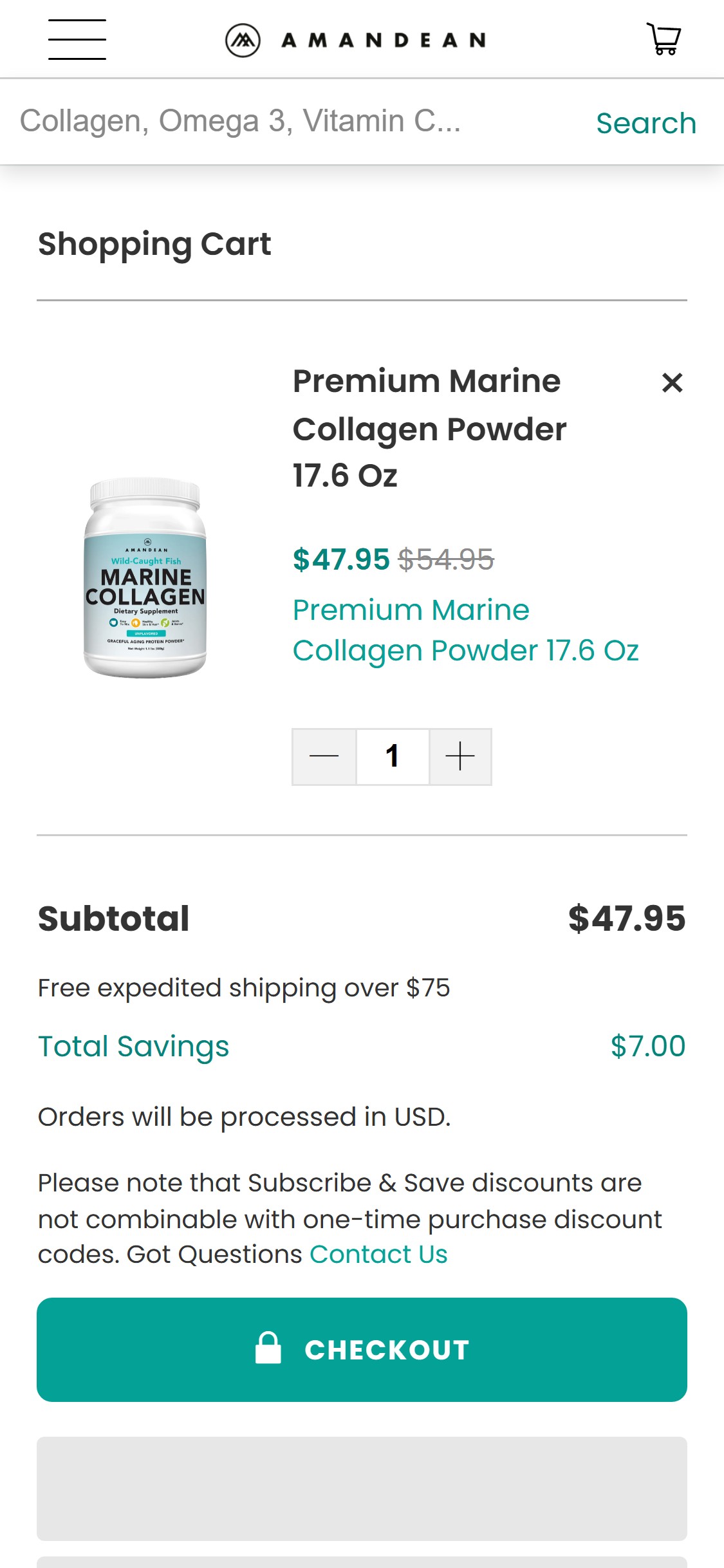
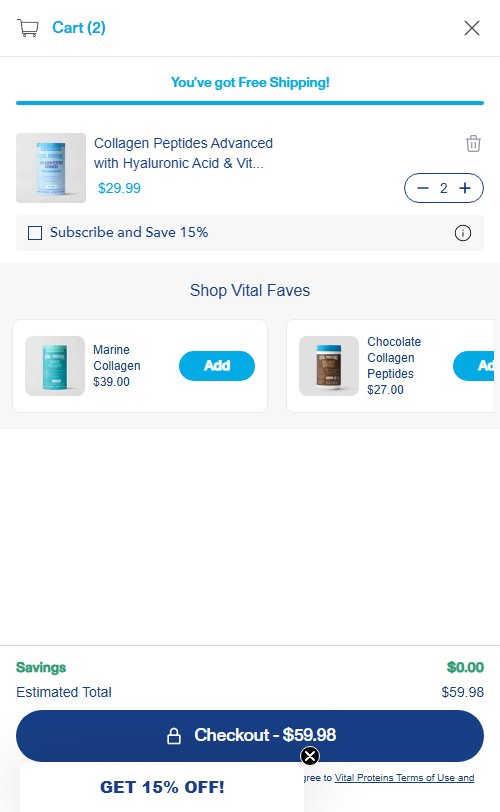
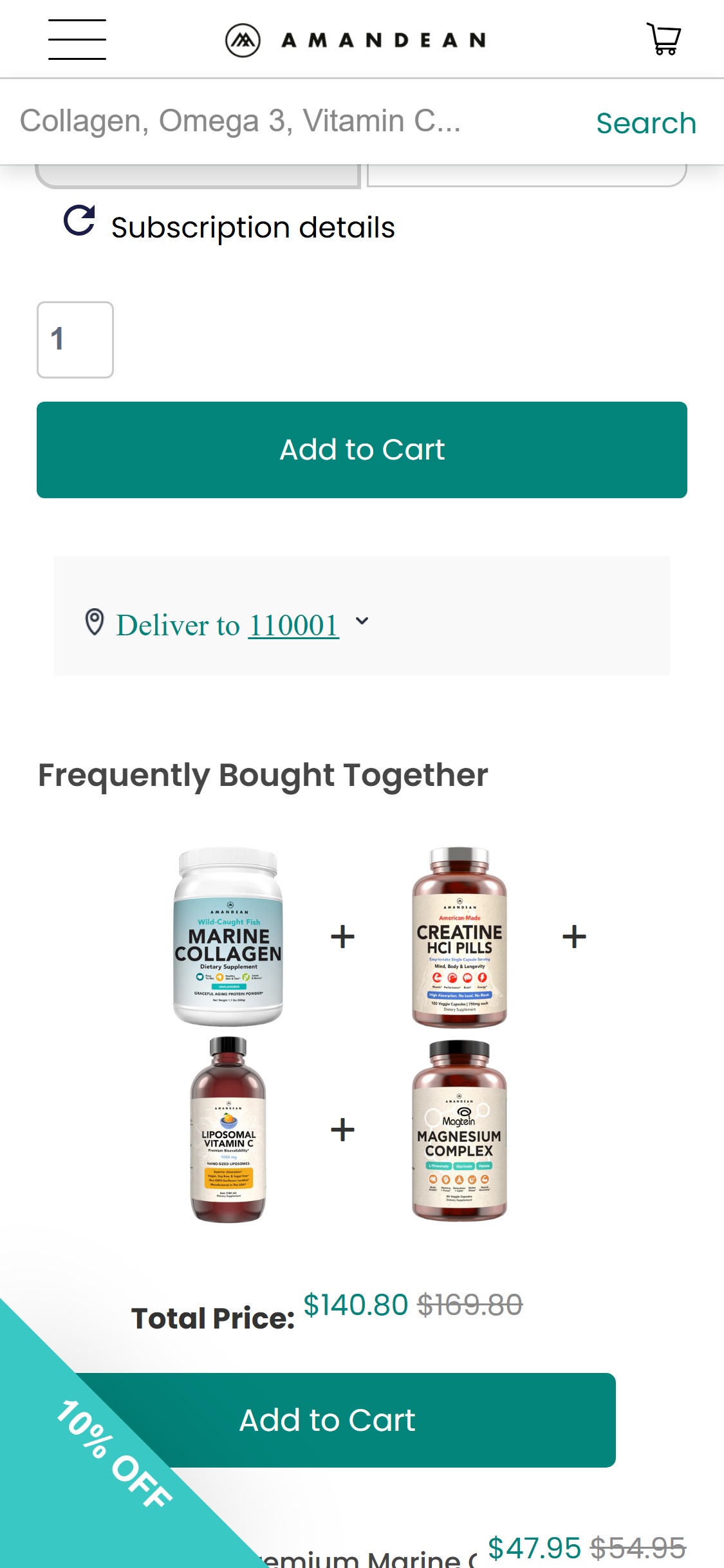
- The Amandean cart page displays the added item with quantity controls and a checkout button but contains no product recommendation section, cross-sell carousel, or ‘Frequently Bought Together’ module.
- With a catalog spanning multiple collagen types and vitamin supplements, Amandean has high-relevance cross-sell pairings available (e.g., Marine Collagen + Vitamin C for absorption, Collagen Powder + Joint-specific formula).
- Standard benchmark: cross-sell recommendations in cart are present on 8/10 top health stores — this is not a differentiator but a baseline expectation for a modern supplement DTC brand.
- The cart represents the highest buyer intent moment on the entire site — a customer who has already decided to purchase one product is the most receptive audience for a relevant complementary recommendation.
- Add a 'Pairs Well With' or 'Complete Your Routine' product carousel below the cart item list showing 2–3 hand-curated complementary products relevant to the product in cart.
- Frame cross-sell recommendations around a benefit narrative: if a customer has Marine Collagen in cart, show Vitamin C (improves collagen absorption) and a Hyaluronic Acid supplement (synergistic skin benefit) with a one-line benefit callout on each card.
- Implement cross-sell using a Shopify app (Rebuy Smart Cart, Frequently Bought Together) or via the Shopify Recommendations API with product-level complement metafields — the latter requires no third-party app install.
Performance & Technology
Core Web Vitals, page-speed signals, and the technology stack powering Amandean
Core Web Vitals
Technology Stack
Performance & Technology Assessment
Mobile performance is needs work (51/100); desktop is solid (84/100) on Shopify. Page-speed and Core Web Vitals are increasingly load-bearing for SEO and conversion in this category — addressing the weakest vital first is the single highest-leverage technical improvement available.
Confidential — Prepared for Amandean by Growisto | May 2026
App Ecosystem
What's installed vs what's missing from best-in-class Health & Wellness stores
Present (6)
Missing (7)
App Stack Assessment
Amandean has a functional foundational app stack: email marketing via Klaviyo, product reviews through a review platform, Subscribe & Save for subscription revenue, and solid payment infrastructure via Shopify Payments. The three highest-priority missing capabilities are: (1) Cart cross-sell to capture AOV uplift — this is the single highest-leverage gap given that the cart currently has zero upsell mechanism and complementary supplement pairings are naturally available (Marine Collagen + Vitamin C, multi-collagen + joint formula); (2) Free shipping progress bar — Amandean offers free shipping on qualifying orders but does not dynamically communicate the threshold gap in cart, leaving a proven AOV lever unused; (3) Subscription pre-selection and collection card subscription pricing — two configuration-level changes (not new app installs) that directly impact the subscription CVR, which is Amandean's primary LTV driver. Enabling these three capabilities requires minimal development investment. The loyalty program gap is the medium-term strategic priority — supplement brands without a loyalty mechanism have materially lower LTV compared to those with point-based or subscription-reward programs.
Confidential — Prepared for Amandean by Growisto | May 2026